
The Recovery Position: A Step-by-Step First Aid Guide
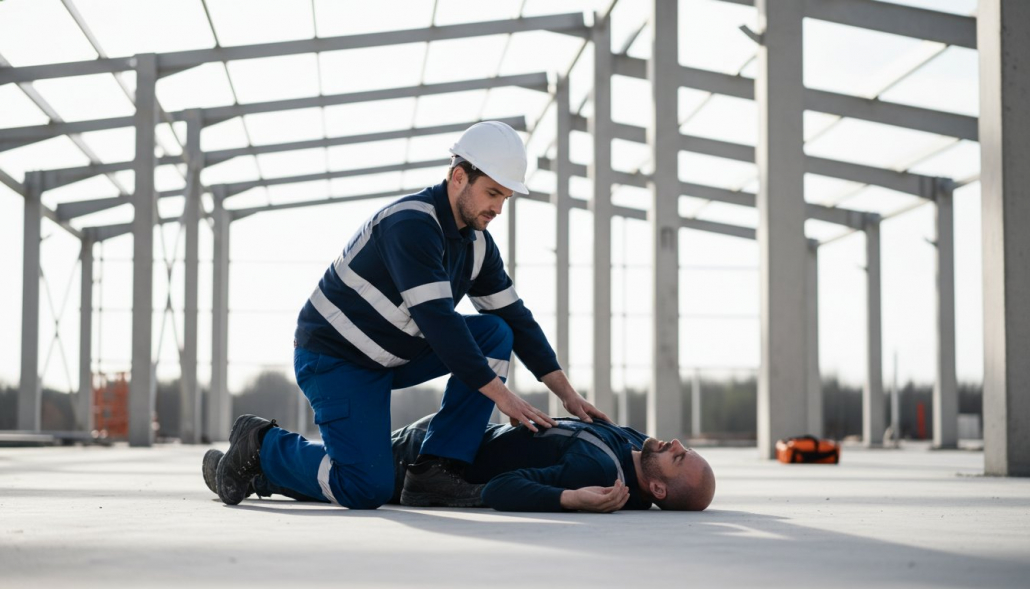
In a critical moment, faced with an unconscious but breathing casualty, the fear of causing more harm can be paralysing. Do you move them? Do you leave them as they are? This uncertainty is a significant barrier to providing potentially life-saving aid. There is, however, a correct and safe procedure designed for this exact situation. Learning the simple steps of the recovery position is one of the most vital first aid skills you can possess, ensuring a casualty’s airway remains open and protected while you wait for emergency services to arrive.
This guide is designed to remove that uncertainty and take the burden of guesswork away. We will provide a clear, memorable, step-by-step process for correctly placing someone in the recovery position. You will learn the crucial signs to look for, understand when this procedure is appropriate-and just as importantly, when it is not. Our goal is to equip you with the expert knowledge and confidence to act decisively and safely, providing effective care until professional help takes over.
What Is the Recovery Position and Why Is It a Lifesaver?
In a medical emergency, simple actions can have a profound impact. The recovery position is a fundamental first aid technique designed to keep an unconscious person safe while they are breathing. Its primary, life-saving goal is to maintain an open and clear airway, ensuring oxygen can continue to reach the lungs until professional help arrives. This procedure is not for a casualty who is awake or one who has stopped breathing; it is specifically for an individual who is unresponsive but has normal, regular breathing.
Understanding when and how to use this technique is a critical skill that can prevent a manageable situation from becoming fatal. It addresses the immediate dangers an unconscious person faces from simple gravity and relaxed muscles.
The Science Behind It: Keeping the Airway Open
When a person loses consciousness and lies on their back, their muscles relax. This includes the tongue, which can fall to the back of the throat and act like a plug, completely blocking the airway. By rolling the person onto their side into the recovery position, gravity works in their favour, pulling the tongue forward and away from the throat. Furthermore, the specific head tilt this position creates allows any fluid, such as saliva or vomit, to drain safely from the mouth, preventing the casualty from choking or inhaling it into their lungs.
When to Use the Recovery Position: The Critical Checklist
This is a crucial holding position, not a long-term solution. It is designed to maintain safety while you await the arrival of emergency services. Before placing someone in this position, you must confirm the following conditions are met:
- The casualty is unresponsive: They do not react when you call their name or gently shake their shoulders.
- They are breathing normally: You must check for breathing. Look for chest movement, listen for breath sounds, and feel for air on your cheek for up to 10 seconds.
- The airway is clear: You have checked their mouth for any obvious obstructions.
- There are no other immediate life-threatening injuries: Conditions like catastrophic bleeding must be managed first.
Once these points are confirmed, placing the casualty in this position provides the best chance of keeping their airway protected.
Step-by-Step Guide: How to Place an Adult in the Recovery Position
Before attempting any first aid, your priority is to ensure the area is safe for you and the casualty. Once you have established safety, check for a response by gently shaking their shoulders and asking loudly, “Can you hear me?”. If there is no response, you must open their airway by placing one hand on their forehead and gently tilting their head back, lifting the chin with two fingers. Check for normal breathing for up to 10 seconds. If they are unresponsive but breathing normally, they must be placed in the recovery position. The following procedure, detailed in official guidance such as the NHS Step-by-Step Guide, is designed to keep the airway clear and open.
Step 1-2: Positioning the Arms
Kneel on the floor beside the person. Take the arm nearest to you and place it out at a right angle to their body, with the elbow bent and the palm facing upwards. This creates a stable base for the roll. Next, bring their other arm across their chest and hold the back of their hand against their cheek on the side nearest to you. Maintain this hand position throughout the next step to support the head.
Step 3-4: Positioning the Leg and Rolling the Casualty
With your free hand, take their knee that is furthest from you and pull it up so that their foot is flat on the floor. You are now ready to roll them. Keeping their hand pressed to their cheek, pull on their bent knee and gently roll the person towards you onto their side. The lever action from the bent leg should make the movement smooth and controlled, requiring minimal effort.
Step 5: Final Adjustments and Monitoring
Once they are on their side, adjust their top leg so that both the hip and knee are bent at right angles. This position prevents them from rolling onto their face or back. Gently tilt their head back one final time to ensure the airway remains open, allowing any fluid to drain from their mouth and preventing choking. It is critical to stay with the casualty and continuously monitor their breathing until professional medical help arrives.
If it has not already been done, call 999 for an ambulance immediately. The recovery position is a crucial temporary measure to protect an unresponsive person, but it is not a substitute for expert medical assessment and care.
To aid comprehension, these steps are best demonstrated visually. We recommend using a simple infographic or a series of clear photographs to accompany this guide.
Special Considerations: Adapting for Infants, Children, and Pregnancy
While the fundamental principles of maintaining an open airway remain constant, the standard adult recovery position must be adapted for individuals with different physiological needs. The anatomical differences in infants, children, and pregnant women require specific, careful modifications to ensure their safety and well-being. A gentler approach is paramount, as smaller, more fragile bodies demand extra care. Understanding these variations is a critical component of effective first aid.
The Recovery Position for an Infant (Under 1 Year)
For an infant who is unresponsive but breathing, you do not place them on the floor. Instead, cradle them in your arms. Hold the infant face-down along your forearm, with their head supported by your hand. It is essential to ensure their head is positioned lower than their body. This specific angle uses gravity to help any fluid or vomit drain from their mouth, preventing them from choking and keeping their airway clear while you await medical assistance.
Modifying the Technique for a Child
Placing a child in the recovery position follows the same sequence as for an adult, but every movement must be performed with less force. Their smaller frame requires a gentler touch when tilting the head, rolling the body, and positioning the limbs. The steps are largely identical to the standard method, which is detailed in the British Red Cross guide to the recovery position, but you may find that you do not need to bend their top leg as sharply to make them stable. Always handle them with care to avoid causing injury.
The Recovery Position for a Pregnant Woman
When assisting a pregnant woman, it is vital to place her on her LEFT side. This specific orientation is crucial because in the later stages of pregnancy, the weight of the womb (uterus) can compress a major blood vessel called the inferior vena cava if she is on her back or right side. This compression can restrict blood flow back to her heart, affecting both her and the baby. To provide additional stability and comfort, use pillows or rolled-up blankets to support her back and under her bump.
Critical Safety Rules: When NOT to Use the Recovery Position
In a first aid emergency, hesitation can be costly. A primary fear for many first aiders is making the situation worse. Understanding when not to use a technique is just as critical as knowing the correct procedure. While an essential life-saving tool, applying the recovery position in the wrong circumstances can cause significant harm. This section provides clear, authoritative guidance on the absolute contraindications.
Suspected Spinal Injury: The Golden Rule
The most critical reason to avoid placing someone in the recovery position is a suspected spinal or neck injury. Moving a casualty with a damaged spine can lead to permanent paralysis or death. If the mechanism of injury suggests a spinal issue, do not move them unless they are in immediate danger (e.g., from fire or traffic).
Look for these signs:
- A fall from a significant height.
- A road traffic collision.
- A direct, forceful blow to the head, neck, or back.
- A diving incident in shallow water.
In this situation, your priority is to maintain an open airway without moving the head or neck. Use the jaw-thrust manoeuvre: place your fingers behind the angles of the casualty’s lower jaw and move it forward. This lifts the tongue away from the back of the throat without tilting the head.
Recovery Position vs. CPR: Making the Right Choice
The distinction between these two procedures is absolute. The recovery position is only for an unconscious casualty who is breathing normally. Its purpose is to keep the airway clear and prevent them from choking on vomit or fluids.
If you assess the casualty and find they are not breathing, or are only taking infrequent, noisy gasps (known as agonal breathing), you must begin Cardiopulmonary Resuscitation (CPR) immediately. Call 999 and start chest compressions. CPR takes priority over almost all other injuries, as restoring the flow of oxygenated blood to the brain is paramount.
Do’s and Don’ts: A Quick Checklist
In a high-stress environment, simple rules are easiest to recall. Commit these points to memory:
- DO confirm the casualty is breathing normally before you do anything else.
- DO call 999 for an ambulance as soon as you realise someone is unconscious.
- DON’T leave the casualty unattended once you have placed them in position. Continue to monitor their breathing.
- DON’T give an unconscious or semi-conscious person anything to eat or drink, as this poses a severe choking risk.
Confidence in these critical moments comes from accredited, hands-on training. To ensure your team is fully prepared to act correctly and decisively, explore our comprehensive range of first aid at work courses.
From Knowledge to Confidence: Why Formal First Aid Training Matters
Reading this guide is an excellent first step towards understanding how and when to use the recovery position. However, theoretical knowledge is only part of the equation. In a real emergency, adrenaline and pressure can make it difficult to recall steps from an article. This is where formal, hands-on training becomes invaluable, transforming your knowledge into the confidence to act decisively and correctly.
Building Muscle Memory for Emergencies
First aid is a practical skill. Our training courses provide a safe and controlled environment where you can practice techniques on resuscitation manikins. Physically performing the steps to place a casualty in the recovery position builds crucial muscle memory, making the actions second nature. A qualified instructor provides immediate, personal feedback to perfect your technique, ensuring you can perform effectively when it matters most and preparing you for the realities of a real-world incident.
Learning to Assess a Situation with Confidence
An accredited first aid course teaches more than just isolated procedures. You will learn how to conduct a full primary survey (DRSABCD: Danger, Response, Send for help, Airway, Breathing, CPR, Defibrillation) to systematically assess a casualty. This framework gives you the confidence to check for normal breathing, identify potential dangers, and make a calm, informed decision. You will understand the complete context of when the recovery position is appropriate, and when other interventions like CPR are required, equipping you to manage a wide range of emergency situations.
Get Certified and Be Prepared to Help
Beyond personal preparedness, a formal first aid qualification is a vital asset. An accredited certificate demonstrates your competence and commitment to safety, often fulfilling legal requirements for workplaces in the UK. By becoming a qualified first aider, you take on a critical role in safeguarding the well-being of your colleagues, family, and community. Take the next logical step from learning to leading. Equip yourself with the skills to provide effective support in an emergency.
View our accredited First Aid at Work courses.
Master the Recovery Position and Be Ready to Act
Understanding how to place someone in the recovery position is a critical first aid skill, essential for keeping an unconscious but breathing casualty’s airway open and clear. However, true competence lies not just in remembering the steps, but also in recognising the critical situations where it should not be used. This guide provides the foundational knowledge, but practical application is the key to acting decisively and correctly in an emergency.
This is where professional training makes the difference. As a fully accredited IOSH and CITB training provider, Safehouse Health and Safety Consultants Ltd is committed to helping businesses across Yorkshire stay safe and compliant. Our expert instructors use their real-world industry experience to turn theoretical knowledge into practical, life-saving confidence. Reading an article is the first step; mastering the skill is the next.
Become a confident first aider. Enrol in our accredited First Aid training courses. Take the definitive step from simply knowing to being fully prepared to protect those around you.
Frequently Asked Questions About the Recovery Position
How long can a person safely stay in the recovery position?
There is no strict time limit, as the primary goal is to maintain an open airway until professional medical help arrives. However, you must monitor the person’s breathing continuously. UK first aid guidelines recommend that if emergency services are delayed for more than 30 minutes, you should gently roll the casualty onto their other side. This helps to prevent pressure sores, provided you do not suspect a spinal injury. Your constant observation is the most critical factor.
What should I do if the person stops breathing while in the recovery position?
If you notice the person’s breathing has stopped or become abnormal, such as infrequent, noisy gasps, you must act immediately. Roll them carefully onto their back on a firm surface. Re-check their breathing. If they are not breathing normally, ensure 999 has been called, and commence CPR straight away. The priority must shift from airway maintenance to performing chest compressions and rescue breaths to circulate oxygenated blood around the body.
Is it better to roll someone onto their left or right side?
For most adults and children, either side is safe and effective. The objective is to keep the airway clear and allow fluid to drain from the mouth. However, for a woman in the later stages of pregnancy, it is recommended to place her on her left side. This prevents the weight of the baby from compressing a major vein, which could restrict blood flow to the heart. In all other standard first aid situations, the choice of side is not critical.
What does ‘breathing normally’ actually mean in a first aid situation?
Normal breathing is quiet, regular, and seems effortless. To check, you should look, listen, and feel for no more than 10 seconds. Look for the chest rising and falling, listen for breath sounds from their mouth or nose, and feel for their breath against your cheek. You must not confuse this with agonal breathing-these are irregular, sharp gasps for air which are not effective breathing. Agonal breathing is a sign of cardiac arrest, and you should start CPR immediately.
Should I remove items like glasses or things from their pockets first?
Yes, this is an important preparatory step. Before you move the person, remove their glasses to prevent them from breaking and causing injury. You should also quickly check the pockets on the side you intend to roll them onto for any bulky or sharp items, such as keys or a phone. Removing these items ensures the person can rest as comfortably and safely as possible while you wait for assistance. Also, consider loosening any tight clothing around their neck.
Can you put yourself in the recovery position if you feel you are about to pass out?
While you could try, it is not the recommended course of action. If you feel faint, the safest procedure is to lie down flat on your back and, if possible, raise your legs. This position helps improve blood flow to your brain. Trying to manoeuvre into the recovery position while feeling dizzy or weak increases the risk of falling and causing injury. This position is specifically designed for an unresponsive casualty who is breathing normally.





Leave a Reply
Want to join the discussion?Feel free to contribute!